Saint Marina of the Qadisha
Saint Marina is the woman the Lebanese tradition remembers as a monk: the Lebanese account says she entered the Monastery of Qannoubine in men's clothing, bore a false accusation in silence for years, and was known as a woman only after her death. Her cave chapel still stands above the Qadisha Valley.
Marina's Choice
The Lebanese tradition remembers Marina as a girl of the Qalamoun hills near Tripoli, in the early centuries of Lebanese monastic life - some accounts place her in the fifth century, others around the year 750. Her mother died when she was small, and her father, a devout Christian named Eugenius, resolved to give his goods to the poor and become a monk at the Monastery of Qannoubine in the Qadisha Valley. When he told her, she asked the question the tradition has never forgotten: will you save your own soul, and destroy mine?
So she cut her hair, put on men's clothing, and took the name Marinos. Father and daughter entered the monastery together as monks, shared a cell, and prayed side by side for ten years, until Eugenius died. The other monks attributed Brother Marinos' soft voice to long hours of prayer.
Accused, and Silent
Sent with other monks on monastery business, Marinos spent a night at an inn. A soldier lodging there seduced the innkeeper's daughter, and when she became pregnant he told her what to say: the young monk, Father Marinos, did this to me. Brought before the abbot, Marinos fell to her knees, wept - and confessed to a sin she could not have committed, choosing to be despised as a guilty man rather than honored as an innocent woman.
The abbot cast her out. She lived at the monastery gate as a beggar, and when the child was born, the innkeeper left the baby with the "father." For ten years, the tradition says, she raised the boy on sheep's milk brought by shepherds, until the monks begged the abbot to take Brother Marinos back - to the hardest work in the house: cooking, cleaning, carrying water.
Known Only After Death
At forty, worn by penance, Marinos fell ill and died. Preparing the body for burial, the monks discovered that their brother was a woman - and that everything they had believed about her was wrong. The abbot came and wept over her; the innkeeper came and wept over her. At her funeral, the tradition adds, a monk blind in one eye touched her body and received his sight. She was buried in a cave near the monastery that had been her only home.
Her Relics Come Home
In the Crusader era her remains were taken from the Qadisha - carried, the accounts say, to Constantinople and then to Venice, where she was venerated for centuries as a patron of the city. Lebanon did not forget her. On July 17, 2018 - her feast day in the Maronite calendar - her relics came home on pilgrimage for the first time in some eight hundred years: received at Beirut's airport with state honors, welcomed by the Maronite Patriarch, and carried up to the Qadisha Valley, where pilgrims venerated them before their return to Venice.
Her Place in the Valley Today
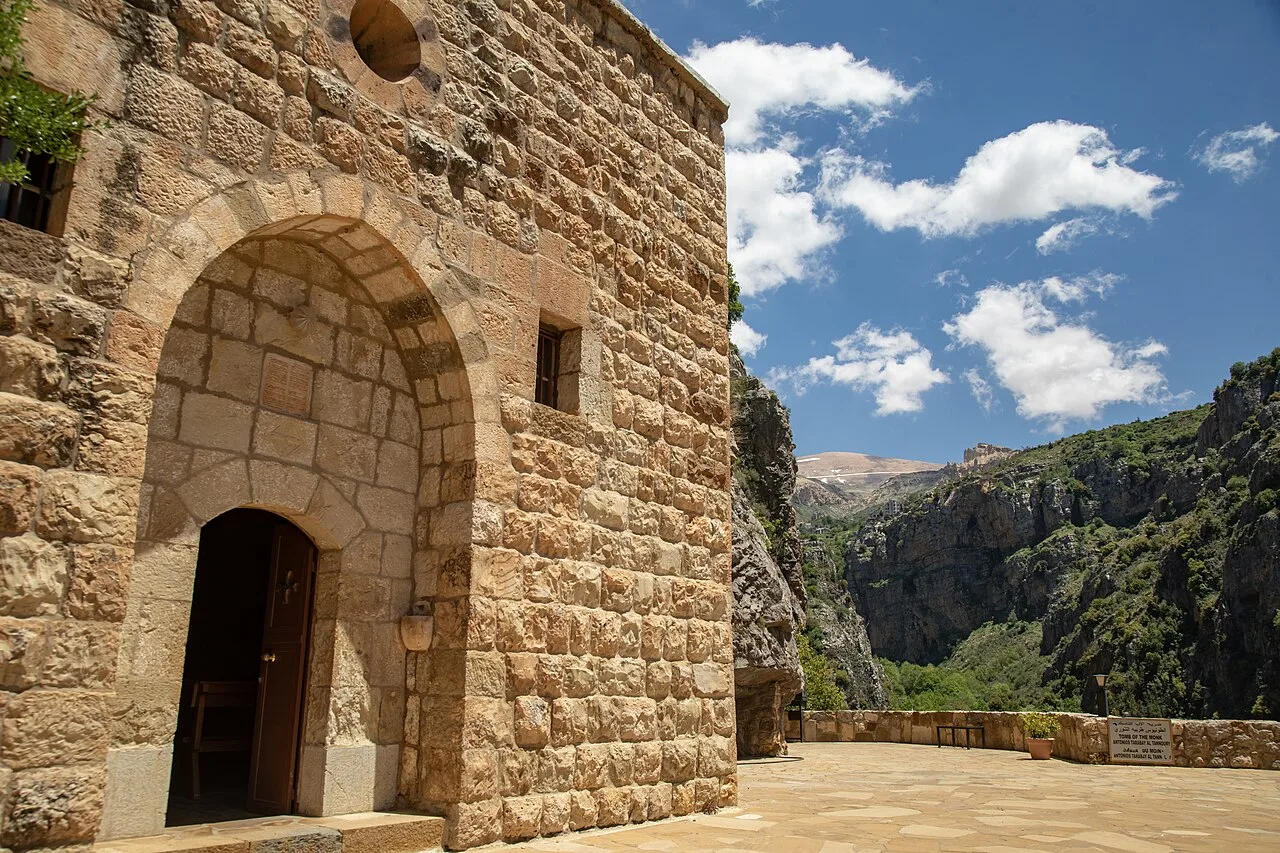
The chapel of Mar Marina still stands beside the Monastery of Qannoubine, above the cave the tradition calls her tomb, and pilgrims still climb down to it through the Holy Valley. Her memory crosses boundaries in Lebanon: even the Druze honor her under the name al-Sitt Sha'wani', with a shrine at Amiq above the Bekaa. In a valley that gave the Church Saint Charbel, Saint Nimatullah and Saint Rafqa, Marina is remembered first - the hidden one who asked not to be left behind.
Frequently Asked Questions
Who was Saint Marina of the Qadisha?
A woman whom the Lebanese tradition remembers as a monk: she entered the Monastery of Qannoubine dressed as a man, lived under the name Marinos, and was discovered to be a woman only at her death. She is venerated as a saint across the Eastern churches.
Is her story historical?
Her life comes down as hagiographic tradition rather than modern documentation - her earliest biography was written between roughly 525 and 650, and accounts differ on her century. This page follows the Lebanese hagiographic tradition, not a modern historical reconstruction.
Why did she live as a man?
Because she refused to be separated from her father and from the monastic life. Monasteries did not receive women, so she entered as the monk Marinos - and kept the secret at the cost of a false accusation and years of public shame.
What happened to her relics?
Taken from the Qadisha in the Crusader era, they reached Venice, where she was long venerated. On July 17, 2018, her feast day, the relics returned to Lebanon on pilgrimage and were carried to the Qadisha before going back to Venice.
When is her feast?
July 17 in the Maronite calendar. She is also remembered on other dates in Eastern and Western calendars, including June 17 in the Episcopal Church's calendar since 2022.
Can you visit her shrine?
Yes - the chapel of Mar Marina beside the Monastery of Qannoubine in the Qadisha Valley, near her traditional cave tomb, is open to pilgrims. The valley itself is a UNESCO World Heritage site.
Keep Reading
More from the Holy Valley and its saints: the Qadisha Valley itself; St Rafqa, the blind nun of Lebanon; the Massabki brothers, Lebanon's first lay saints; Blessed Abouna Yaacoub, the Apostle of Lebanon; and Saint Charbel's Lebanon, place by place.
Sources
- Marina the Monk - account of the earliest vita (525-650), the legend, and her veneration
- The Daily Star / Al Bawaba: "Relics of St. Marina Returned to Lebanon in Glass Box from Italy's Venice" (July 18, 2018)
- IMLebanon: Marina’s pilgrimage visit, July 17, 2018 - the Lebanese tradition and differing era
- Lebanon Debate: July 21, 2018 - departure schedule and return to Venice
- Yerepouni Daily News: "Ancient relics of St. Marina arrive in Lebanon" (July 17, 2018)
- Wikimedia Commons: Qannoubine church, Qadisha Valley - Hussein Sabboury, CC0