Rare period footage - Padre Pio at the altar, in the friary corridors, among the crowds on the Gargano (about 10 minutes). Watch on YouTube.
St. Padre Pio
A Capuchin friar from the hills of southern Italy who bore the wounds of Christ in his own body for fifty years, heard confessions for up to sixteen hours a day, built a hospital out of other people's pain, and left one line of counsel the whole world now repeats: "Pray, hope, and don't worry." This page is his story told straight - what is documented, what is reported, what the Church investigated and finally vindicated - his prayers, his way, and how to make the pilgrimage to San Giovanni Rotondo yourself.
At a Glance
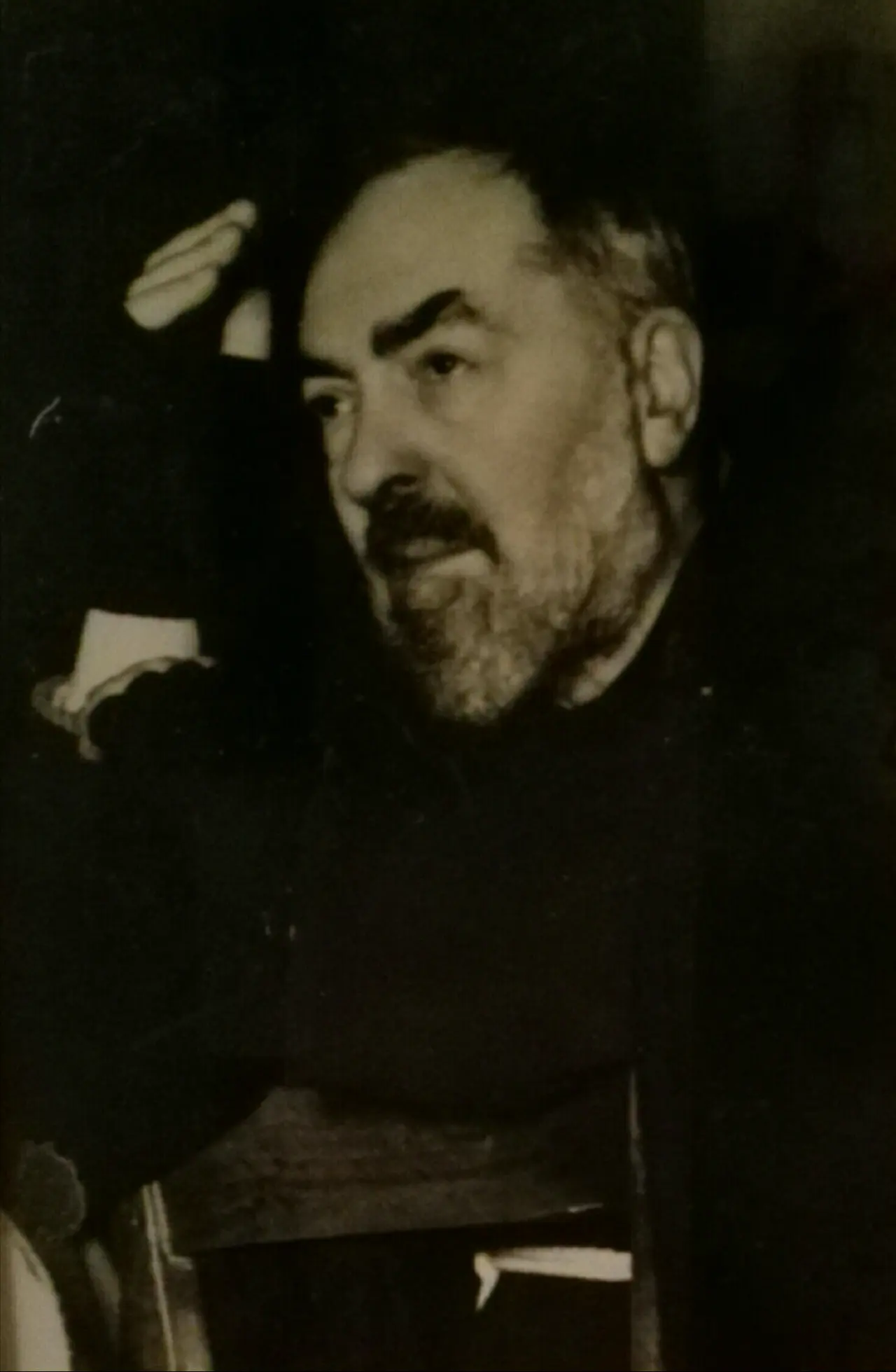
Who: Padre Pio of Pietrelcina, born Francesco Forgione (1887-1968), Capuchin friar and priest of San Giovanni Rotondo, Italy.
Known for: the stigmata - the wounds of Christ - which he bore from 1918 until his death, the first priest in Church history documented to carry them; a confessional ministry that drew millions; the hospital he founded, Casa Sollievo della Sofferenza; and the worldwide Prayer Groups.
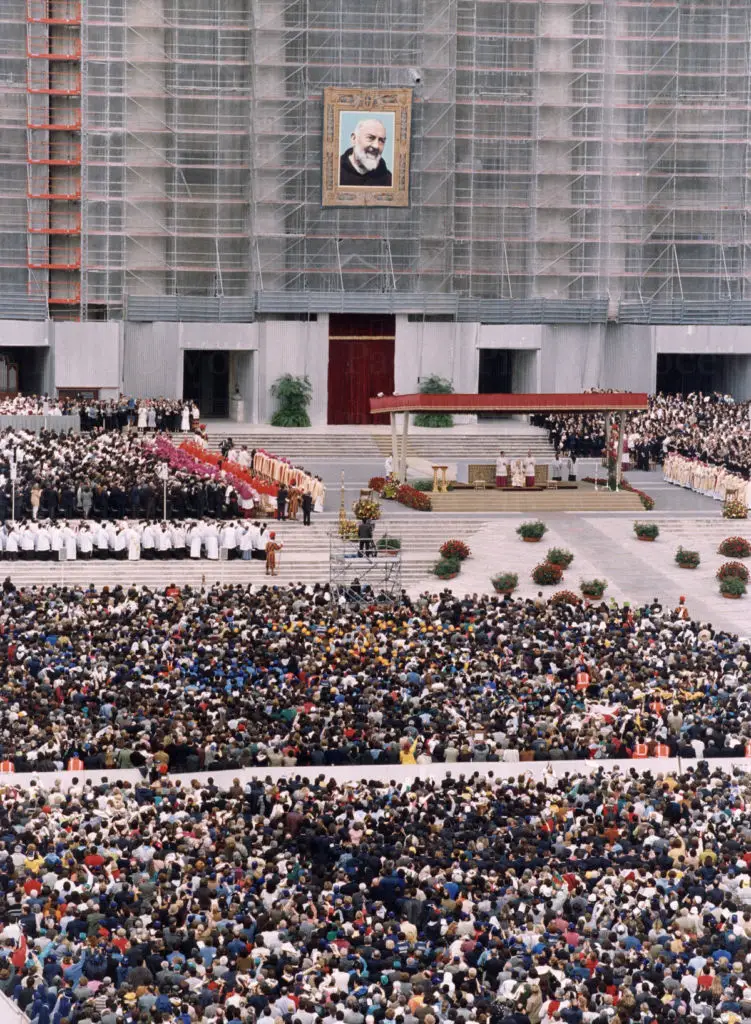
Status: canonized Saint on June 16, 2002, by Pope John Paul II, before one of the largest crowds Rome had ever seen. His feast day is September 23, the day he died.
His tomb: the crypt of the church of Santa Maria delle Grazie, San Giovanni Rotondo, where his body rests in a glass casket and millions of pilgrims come to pray each year.
His Life (1887-1968)
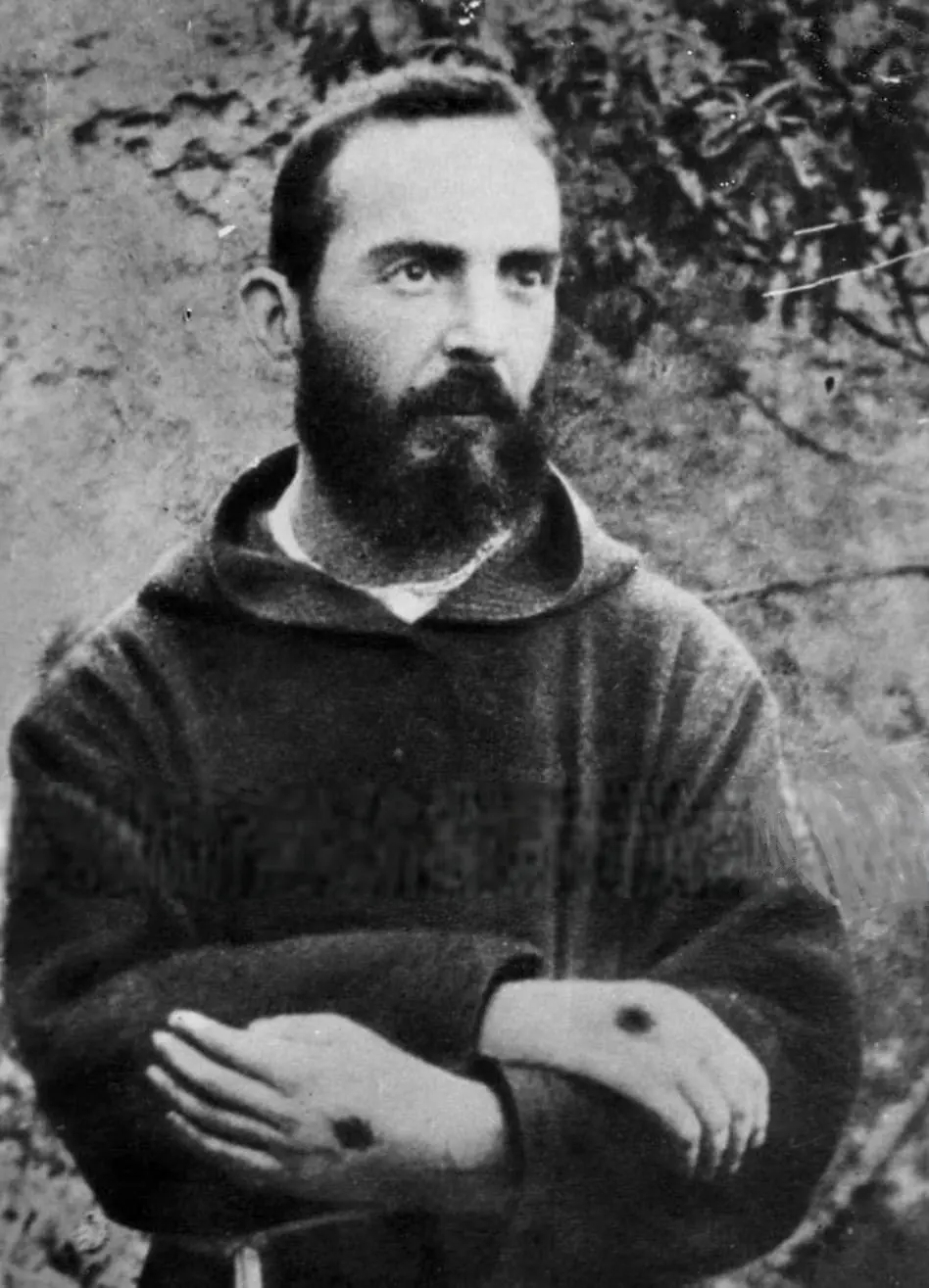
Francesco Forgione was born on May 25, 1887, in Pietrelcina, a farming village near Benevento in southern Italy, to peasant parents who could not have guessed what they had. He prayed before he could read, dedicated himself to God at five, and at fifteen - January 6, 1903 - walked into the Capuchin novitiate at Morcone and took the name Pio, in honor of Saint Pius V. He was ordained a priest on August 10, 1910.
His body was frail from the start: fevers, migraines, respiratory trouble so persistent that his superiors sent him home to his family more than once, sure he would not last. In 1916 they sent him to the mountain air of San Giovanni Rotondo, a poor town on the Gargano promontory in Puglia, hoping the climate would steady him. It became his home for the rest of his life. He almost never left again.
Word spread slowly, then all at once. By the 1920s the road up the Gargano carried a steady stream of the sick, the doubting, the grieving, and the curious - soldiers back from two wars, mothers with impossible cases, priests testing him and leaving converted. He rose before dawn, said a Mass that could stretch past two hours because he wept through it, then sat in the confessional for eight, twelve, sometimes sixteen hours. He slept a few hours a night. He ate almost nothing. This went on for five decades.
He died in his cell in the early hours of September 23, 1968, three days after the fiftieth anniversary of the stigmata had drawn tens of thousands to San Giovanni Rotondo, and hours after celebrating what would be his last Mass. His last words were the names "Gesù, Maria." When the friars prepared his body, they found the wounds he had carried for fifty years closed, with no scars.
The Stigmata
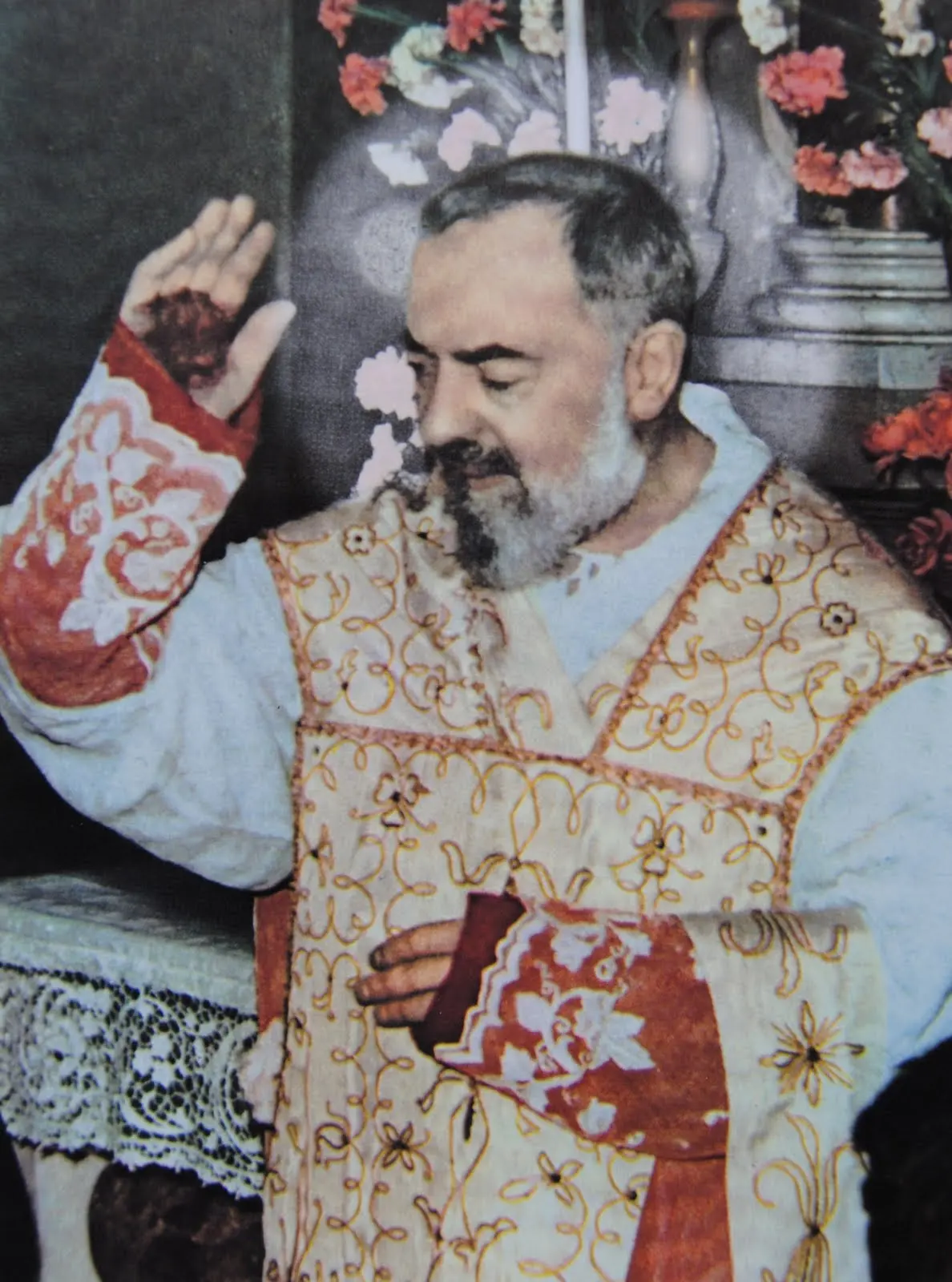
On the morning of September 20, 1918, Padre Pio was praying after Mass before the crucifix in the friary's choir chapel when, as he wrote days later to his spiritual director, a mysterious figure appeared and from it came beams of light that pierced his hands, feet, and side. When it withdrew, he found himself bleeding from wounds in the places of Christ's five wounds. He was thirty-one.
He begged God to take the outward signs away and keep only the pain, and he hid the wounds under fingerless coverings for the rest of his life. But the facts were examined again and again. Physicians - Professor Amico Bignami in 1919, Dr. Giorgio Festa across several examinations, and Dr. Luigi Romanelli in 1920, among others - inspected the wounds at the Church's request and recorded what they saw: bleeding wounds through the hands and feet and in the side that, across fifty years, never healed and never became infected. No medical explanation ever settled the case.
This page reports that as it stands: the stigmata are among the most medically examined phenomena of their kind, they are documented, and the Church - after watching him for decades - canonized the man who bore them. Francis of Assisi bore the stigmata before him, but Padre Pio was the first priest in the Church's history to carry the wounds.
Investigated - and Vindicated
The Church did not take any of it on faith, and honesty requires saying so. The Holy Office investigated Padre Pio repeatedly. In 1923 he was forbidden to celebrate Mass in public or hear confessions; in 1931 the restrictions tightened, and for a stretch he could say Mass only privately, in an inner chapel, while crowds pressed at the doors. Doubts were raised about his honesty, his health, even his motives - and he bore them with the same patience he preached, obeying every order without protest.
The turn came in 1933, when Pope Pius XI had the restrictions lifted - he is remembered saying he had not been badly disposed toward Padre Pio but badly informed. Pope Paul VI went further in 1964, setting aside the suspicions and encouraging the friar to persevere. And on June 16, 2002, the Church that had watched him hardest closed the question: Pope John Paul II - who had knelt at his confessional as a young priest in 1947 - declared him a saint. The investigation lasted decades. The vindication was total.
The Confessional - and the Reported Wonders
The core of his day was the confessional, and the core of the confessional was something witnesses struggled to describe: he seemed to know. Penitents who came with rehearsed, partial confessions reported being stopped and told the sins they had omitted - not roughly, but with a surgeon's precision, and then with mercy. The lines stretched around the friary; the friars issued tickets. Millions of confessions passed through that wooden box across fifty years.
Around this documented center gathered the accounts this site presents as exactly that - reported accounts, devotional tradition, not formal decrees: people who said they smelled a perfume of flowers or incense announcing his presence; witnesses who reported him appearing far from San Giovanni Rotondo while friars testified he never left; doctors and patients at his hospital who attributed recoveries to his prayers. The Church pronounces on sainthood and on the miracles presented for it, not on every story told about a saint, and neither does this page. What is certain is simpler and stranger than any legend: a sickly friar sat still for fifty years, and the world came to him.
What He Built: a Hospital and an Army of Prayer
Padre Pio did not only console the sick - he built for them. In 1956, on the hillside below the friary, he opened Casa Sollievo della Sofferenza - the Home for the Relief of Suffering - a modern hospital he called his "earthly work," funded by the offerings of the same ordinary people who filled his confessional. It stands today as a major hospital and research institute, still run in his spirit: he insisted that in it, the suffering would find not only medicine but love.
And he organized prayer itself. The Padre Pio Prayer Groups began as circles of the faithful he asked to become "nurseries of faith" - meeting to pray, to sustain the Church, and to carry the suffering. They spread across the world and still gather by the thousands under the direction of his shrine. His way was never private mysticism; it ended in institutions that outlasted him.
His Prayer
Ask what Padre Pio did and the honest answer is: he prayed. Everything else - the stigmata, the confessional, the hospital - was fruit. Three doors into his prayer:
The Rosary. He prayed it constantly - witnesses counted many full rosaries a day - and he called it "the weapon." His counsel was plain: "Love the Madonna and pray the Rosary, for her Rosary is the weapon against the evils of the world today." If you are new to it, our visual guide to the Rosary walks you bead by bead.
"Stay with me, Lord." The prayer after Communion attributed to him, prayed by his spiritual children to this day. It begins: "Stay with me, Lord, for it is necessary to have you present so that I do not forget you. You know how easily I abandon you." And it ends in the cry his whole life was: "Stay with me, Lord, because at the hour of my death I want to remain united to you... so that with you, one day, I may rejoice." Attributed to Padre Pio - the attribution is devotional tradition, not a signed manuscript, and we say so.
The Sacred Heart Novena. He prayed this novena every day and recommended it constantly, and devotional tradition has carried it forward under the name "efficacious." Honest fine print, the same he would have written: no prayer is a transaction and no formula forces God's hand - he himself called prayer "the key to God's heart," not a key to God's cupboard. Pray it as he did: faithfully, and leaving the answer to God.
His Way, in His Own Words
"Pray, hope, and don't worry." The whole of his direction in one line, repeated in his letters and to everyone who asked. In fuller form: pray, hope, and don't worry - worry is useless; God is merciful and will hear your prayer.
"Prayer is the best weapon we have; it is the key to God's heart." From his letters of spiritual direction. Notice the order: first prayer, then everything else. He told the anxious to stop managing outcomes and start keeping company with God.
Keep the eyes on Jesus. His direction for the scrupulous and the despairing was never analysis - it was a look. When his spiritual children wrote to him crushed by their own faults, his answer returned again and again to the same move: stop staring at yourself, and look at him.
Following his way, concretely, is what he asked of everyone: daily prayer you actually keep, confession you actually make, the Rosary in your pocket, and your duty done without drama. The daily practice pages of this site are built on the same skeleton.
Watch: Real Footage of Padre Pio
Padre Pio died in 1968 - late enough that real film of him exists. These videos are hosted on YouTube by their channels and were not produced by this site; each uses youtube-nocookie.com (no YouTube cookies unless you press play) and was verified playable before embedding.
His final Mass, September 1968 - the last film of him at the altar, days before his death (about 5 minutes). Watch on YouTube.
Saint Padre Pio: Amazing Stories - EWTN's Living Divine Mercy documentary on his life and the accounts around him (about 27 minutes). Watch on YouTube.
The Pilgrimage: San Giovanni Rotondo
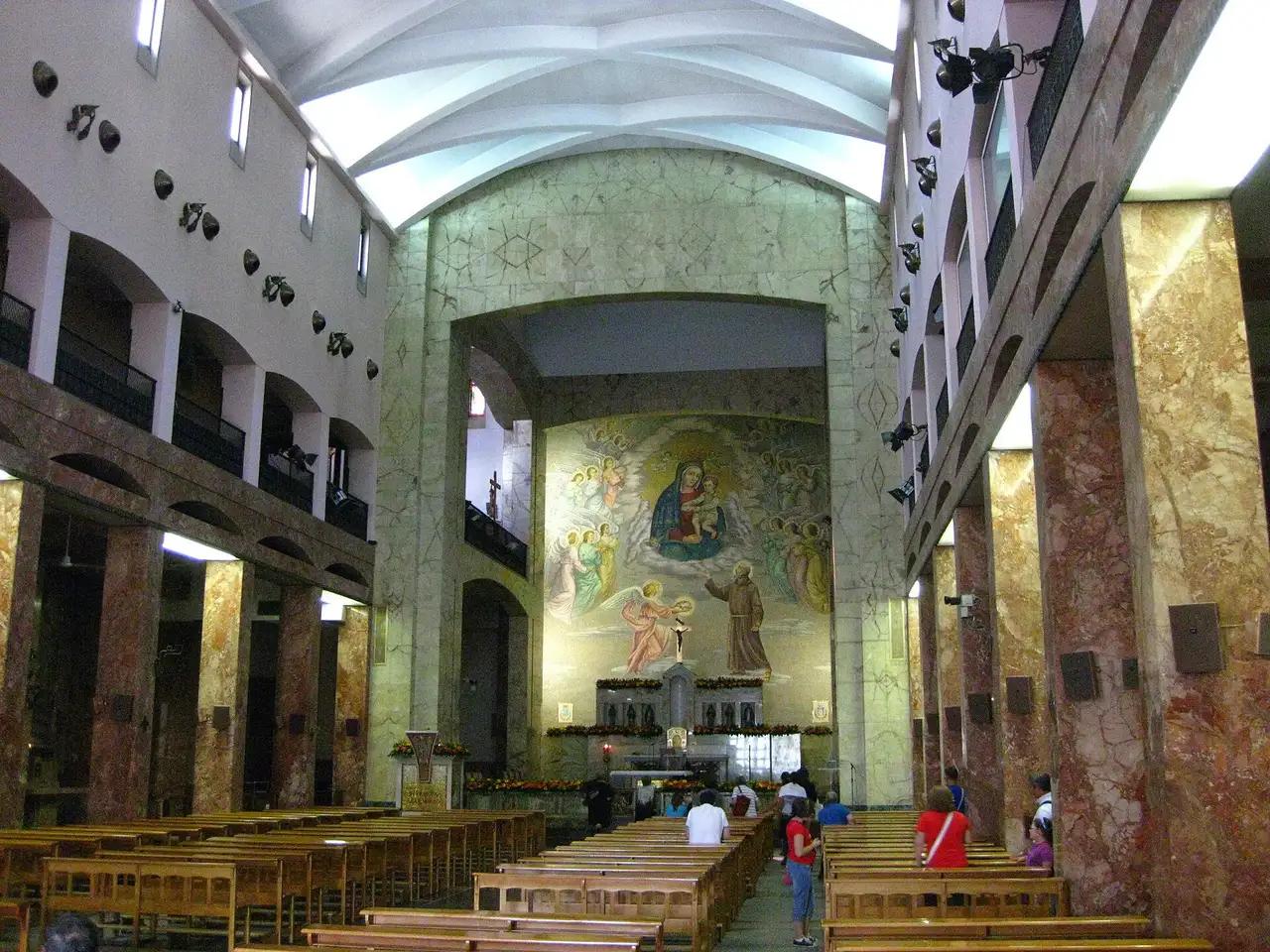
Everything is in one small town on the Gargano promontory in Puglia - he barely left it for fifty years, so the pilgrimage is unusually concentrated. Plan around four stops:
Santa Maria delle Grazie. The old convent church where he lived, celebrated Mass, and heard confessions from 1918 to his death. In the choir chapel is the crucifix before which he received the stigmata; his cell - Cell 5 - is preserved as he left it; his confessional still stands. Arrive early: the church fills before the first Masses.
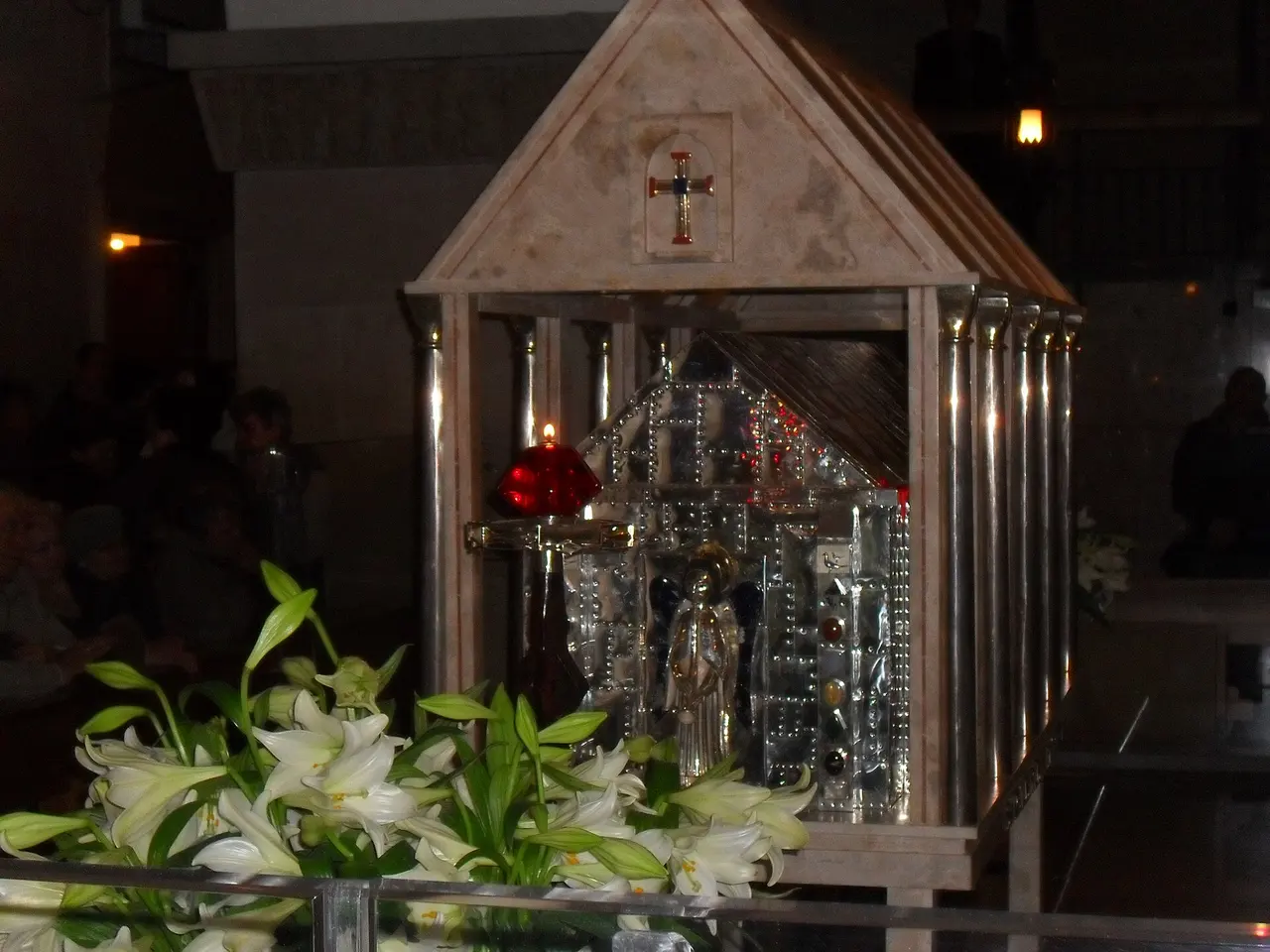
His tomb. His body rests in a glass casket in the crypt of Santa Maria delle Grazie, brought up and displayed in 2008 - forty years after his death - and venerated there since. In February 2016 the shrine made one famous exception, when his body was carried to Saint Peter's in Rome for the Year of Mercy. Pilgrims file past the casket in silence all day; the queue moves steadily.
The Padre Pio Pilgrimage Church. The great modern church beside the old one, designed by Renzo Piano and consecrated in 2004 because the old church could no longer hold the crowds - it seats thousands under a vast stone roof that echoes the Gargano's arches.
Casa Sollievo della Sofferenza. The hospital on the hillside below - his "earthly work" - still operating, still his. Pilgrims visit its chapel and the view over the plain his prayers watched for fifty years.
Getting there. San Giovanni Rotondo sits inland on the Gargano, in the province of Foggia. The practical gateway is Foggia - on the main rail line from Rome and Bari - with buses from Foggia up to the town; many pilgrims also come by organized coach from Rome. Check current Mass, confession, and cell-visit times on the official shrine site, padrepio.it, before you travel - schedules change with the seasons and the calendar. The year's peak is September 23, his feast; the anniversary of the stigmata, September 20, draws its own crowds. Go modestly dressed, expect queues with grace - he made people wait too - and leave time to simply sit in the old church. That stillness is the point of the place.
Frequently Asked Questions
Is Padre Pio a saint?
Yes. Pope John Paul II canonized him on June 16, 2002, in Saint Peter's Square - declared a saint of the universal Church, not merely beatified. His feast is September 23.
Were the stigmata real?
What is documented: from September 20, 1918 until his death in 1968, he carried bleeding wounds in his hands, feet, and side; physicians examining them at the Church's request recorded wounds that never healed and never infected over fifty years; at his death the wounds were gone, leaving no scars. The Church investigated him for decades, restricted him, and finally canonized him. This page presents the documented record and does not argue you into a conclusion.
What miracles were recognized for his sainthood?
For beatification, the Church recognized the healing of Consiglia De Martino; for canonization, the healing of a seven-year-old boy, Matteo Pio Colella, from a coma after doctors at Padre Pio's own hospital had given him up. Both were examined under the Church's full medical and theological process.
What is the Prayer Group movement?
Circles of prayer he asked his spiritual children to found - "nurseries of faith" - to sustain the Church and carry the suffering. They continue worldwide under the direction of the shrine at San Giovanni Rotondo.
Where is he buried?
His body lies in a glass casket in the crypt of the church of Santa Maria delle Grazie, San Giovanni Rotondo, Italy, where pilgrims venerate him daily.
Did he know John Paul II?
Yes. In 1947 a young Polish priest named Karol Wojtyła traveled to San Giovanni Rotondo and confessed to him. Stories told afterward say Padre Pio saw the young priest's future; what is documented is the meeting itself - and that fifty-five years later, as pope, Wojtyła declared his old confessor a saint.
Sources
- The Holy See: homily of John Paul II at the canonization of St. Pio of Pietrelcina (June 16, 2002) - the canonization, his teaching, and the counsel "pray, hope, and don't worry"
- Sanctuary of Santa Maria delle Grazie, San Giovanni Rotondo (padrepio.it) - the official shrine: the friary, the tomb, the hospital, the Prayer Groups, and current visit times
- Padre Pio of Pietrelcina, Epistolario (Letters, vols. I-IV) - the source of his counsels quoted above (print)
- Wikimedia Commons: the photographs on this page, each public-domain or Creative Commons, credited in its caption