Page 1 of 10
Loading story...
Please wait while we open the storybook.
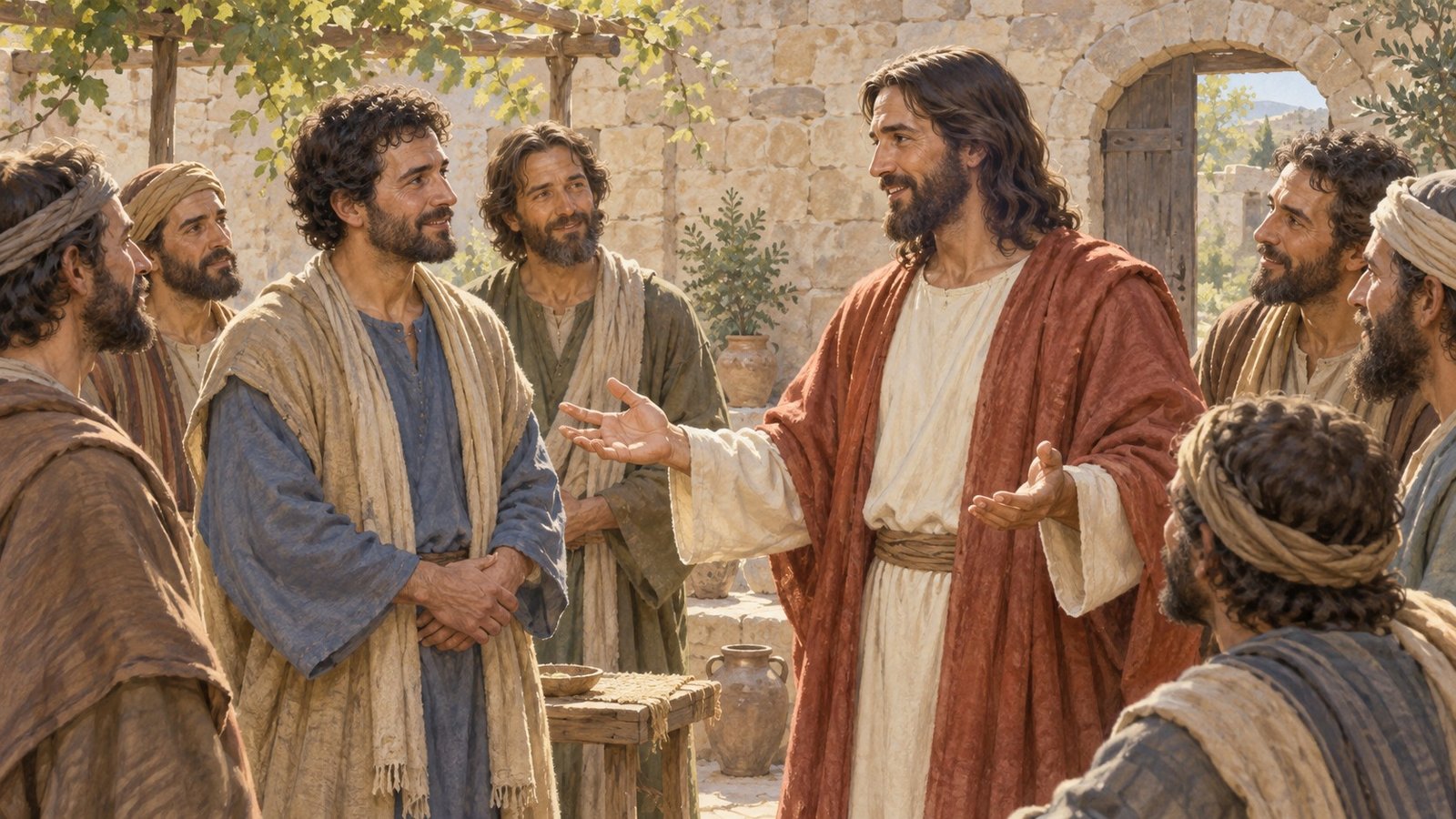
Jude brings an honest question to Jesus. Read his story together, then make room for a question of your own.
Short answer: This nine-page Saint Jude storybook for ages 6 to 12 follows Jude Thaddeus among the apostles and his question at the Last Supper, with Jesus' answer about love and making a home with God, following Benedict XVI's reading of John 14. It ends with a narrated family reflection.
This story follows Jude Thaddeus among the apostles, his question at the Last Supper, and the answer Jesus gives about love and making a home with God. It follows Benedict XVI's reading of John 14. The letter bearing Jude's name is discussed with its uncertain authorship clearly stated. Nine illustrated pages end with a narrated family reflection.
Page 1 of 10
Please wait while we open the storybook.
AI-generated read-aloud narration. Illustrations are original composite scenes, not historical footage.
With a trusted adult, read John 14:22-23 and Jude 20-22. Notice the question at the table, the answer about love, and the invitation to show mercy to people who doubt.
The final page offers four points of reflection and an original family prayer. Children can bring difficult questions to a trusted adult. Prayer does not replace practical help or promise a particular outcome.
Jude is one of the Twelve apostles. Matthew and Mark call him Thaddeus, and Luke calls him "Judas, the son of James." Benedict XVI noted that very little about him has come down to us.
The one thing the Gospels record is his question at the Last Supper in John 14:22: "Lord, how is it that you will manifest yourself to us and not to the world?" Jesus answers that anyone who loves him will keep his word, and that the Father and he will "make our home" with that person. A short New Testament letter carries the name Jude, and its authorship is uncertain. People pray to Saint Jude for hard situations, which is a devotion and not a Church title.
Sources: Benedict XVI: Simon and Jude, October 11, 2006; John 14.
Illustrations are imaginative composites, not eyewitness reconstructions. Pages eight and nine show modern family reflection scenes, not Jude alive in a later century. This Catholic retelling follows Benedict XVI's identification of Jude Thaddeus in John 14; the USCCB note records a different scholarly identification. The letter's authorship remains uncertain. The final reflection is original, not historical dialogue.
Sources: Benedict XVI: Simon and Jude, 11 October 2006; USCCB: John 14 and identity note; USCCB: Letter of Jude;
One of the Twelve apostles, distinct from Judas Iscariot. Little is known about his early life. This story follows Benedict XVI's reading of his question at the Last Supper.
Children ages 6 to 12, reading or listening with family. Nine illustrated pages lead to four narrated points of reflection.
Christians have long linked the letter with this apostle, but its authorship is uncertain. The story says this clearly rather than treating the attribution as proved.